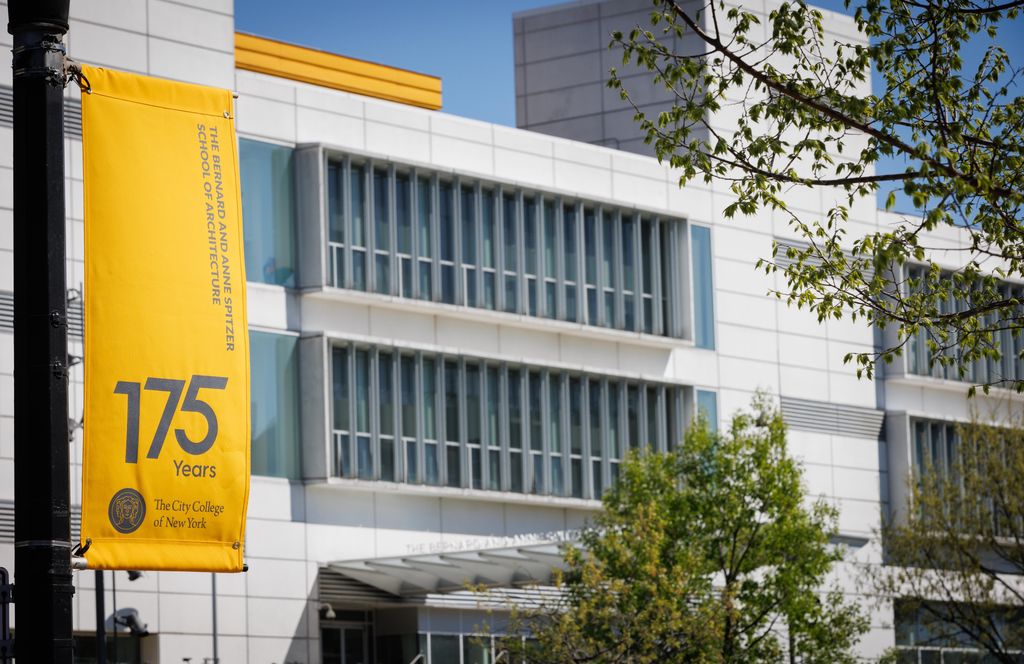
For Dr. Marta Gutman, Dean of the Spitzer School since 2022, urban architecture is more than aesthetics and infrastructure— it’s a political and socioeconomic tool that can be used to include or exclude the public.
“Architects make important decisions. Design matters enormously, and there are ways in which designs create settings that can be empowering, empowering to larger social groups; there’s lots of work to do to make sure that inclusion happens,” says Gutman.
An expert in public spaces for children and repurposing architecture for city-building, she joined City College in 2004. From 2006 to 2018, Gutman coordinated the school’s history-theory curriculum, working with colleagues to implement the Histories of World Architecture sequence, required for Spitzer students in architecture.
Today, the curriculum is expansive, devoted to addressing architecture history in the global context.
“In the beginning, there was some pushback from students asking, ‘why do I have to learn about so many buildings? …You’re just dragging me all over the world. Why do I need to know this?’”
“But that didn’t last very long. And, then as the richness of the offerings grew and the capacious stories that we must tell about architecture across the world became integrated in what we’re teaching… the request was for more.”
Soon after, she noticed students were using the design-a-degree CUNY BA program to craft a makeshift urban studies program — and taking courses at Spitzer and the Colin Powell School for Civic and Global Leadership. Gutman recognized the interest and demand for a stand-alone urban studies program and began laying the groundwork by drafting the proposal. The major launched in 2024 and is attracting widespread interest from students.
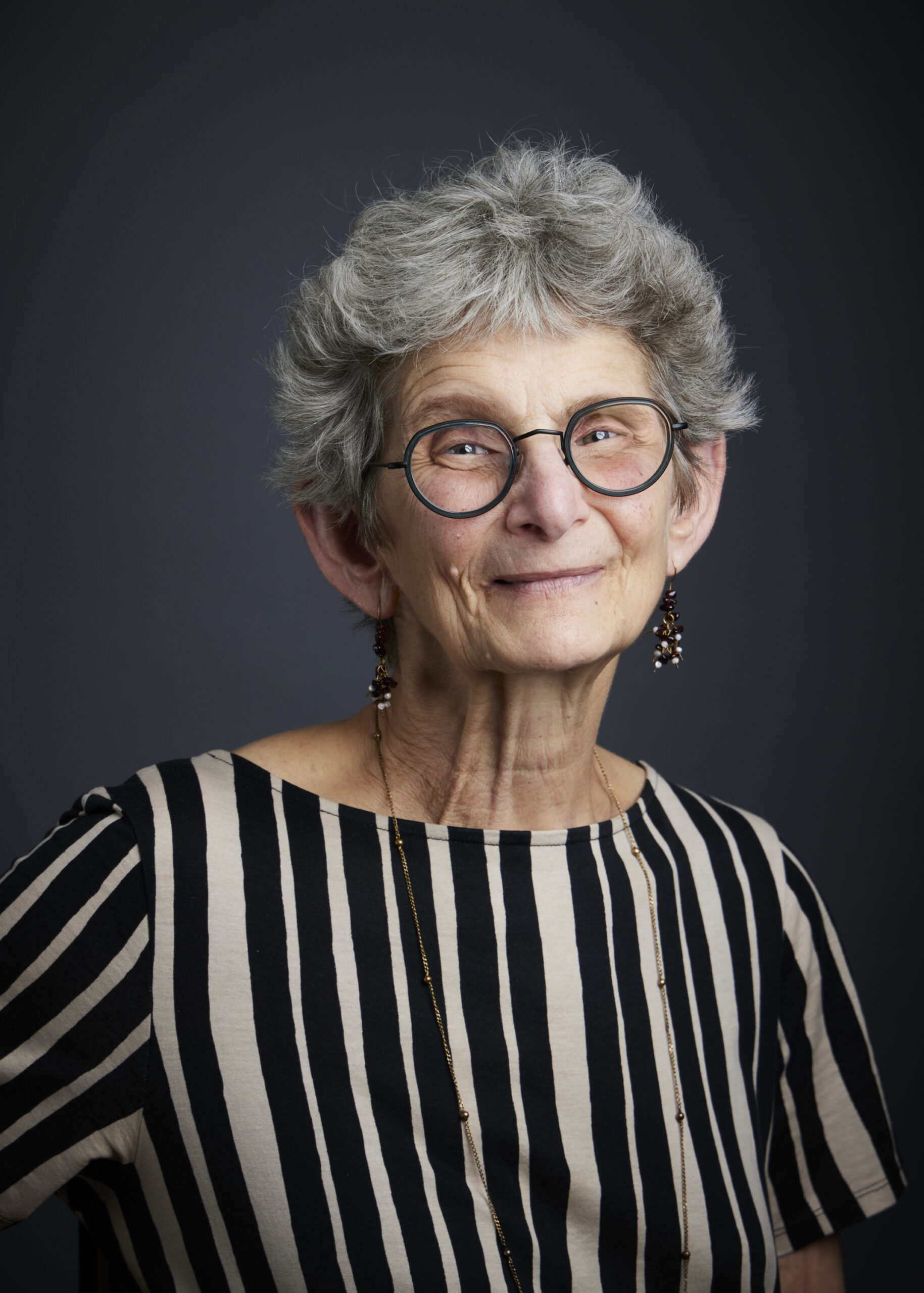
Photo courtesy of Dr. Gutman.
“The hope is that Spitzer’s students in urban studies will come into conversation with our students in design, so the people who will be meeting each other across community board meetings, in planning hearings, in preservation hearings, not only in public settings, but also in professional settings, will meet each other here, and learn to understand each other’s positions and start the conversations that will end up making New York a better place, a better place to live,” Gutman said.
Before 1972, many architecture schools did not admit women until the passing of Title IX. According to 2025 data from the National Council of Architectural Registration Boards, 27% of registered architects are women, compared to about 4% in 1988.
“There’s still work to do. But we’ve made progress in advancing women in architecture schools; women and people who identify as women make up 55% of the student body at Spitzer. When I hear ‘well, schools should mimic the profession,’ I take exception, with this reminder: the schools are in the lead, educating women to become designers.”
Gutman graduated from Brown University in 1975 with a bachelor’s degree in art and moved to New York City to pursue a career in publishing.
The same year Gutman graduated, New York City ran out of money. The city, especially its infrastructure, was in extreme decay – fires in the South Bronx burnt down a significant amount of housing, and displaced 250 residents throughout the 70s. Landlords abandoned buildings, which saw an increase in squatting and overcrowded shelters.
Gutman wanted to solve these problems and attended the Columbia University Graduate School of Architecture, Planning and Preservation, graduating in 1981.
From 1978 to 1984, she worked for a firm focused on providing low-income housing in Manhattan Valley and similar neighborhoods across the city. Its goal was to provide shelter for the working class, the homeless, and domestic violence victims.
The firm, led by architect Conrad Levenson, was hired by non-profit housing providers and the New York City Housing Authority to increase housing by renovating row houses and tenements. “That was unusual in the early 1980s,” Gutman noted. “Clients preferred new buildings.”
She returned to Columbia as an assistant professor, where she taught until 1988. According to Gutman, around this time, landlords began converting more and more buildings into co-ops. Welfare hotels were being emptied, leaving residents without a place to live.
“You could hear this at night, people’s belongings being tossed out of windows as tenants lost housing,” she said. “This was not abstract. The Upper West Side was a very, very different place than it is right now.”
Gutman became a licensed architect in 1988, taught at Parsons School of Design until 1992, and then decided to switch her professional gears. She headed out west to pursue her Ph.D. at the University of California, Berkeley. For her dissertation, she looked to Oakland, where lack of resources and social inequality led to women repurposing private houses into orphanages, kindergartens, settlement houses, and day care centers. She published this award-winning research in A City for Children: Women, Architecture, and the Charitable Landscapes of Oakland, published by the University of Chicago Press in 2014.
She is currently writing a new book, “Just Space: Architecture, Education, and Inequality in Postwar Urban America.” It was inspired by I.S. 201, an infamous windowless and segregated Harlem school that served as a focal point for civil rights activism. In 1964, “more than 460,000 pupils—half of the students enrolled in the city’s public schools—stayed home, making for the largest civil rights protest in U.S. history” and put pressure on the Board of Education to not only desegregate, but also hire Black administrators and integrate Black history into curricula.
She’s detailed the school’s legacy in the chapter “Intermediate School 201: Race, Space, and Modern Architecture in Harlem” which is featured in Educating Harlem: A Century of Schooling and Resistance in a Black Community, published by Columbia University Press in 2019.
Dean Gutman will present a paper that draws from “Just Space” later this month at Boston University.

Mia Euceda served as an editor for Baruch College’s Ticker newspaper and Refract Magazine. Their work has been published in The New York Review of Books and Treble Zine.