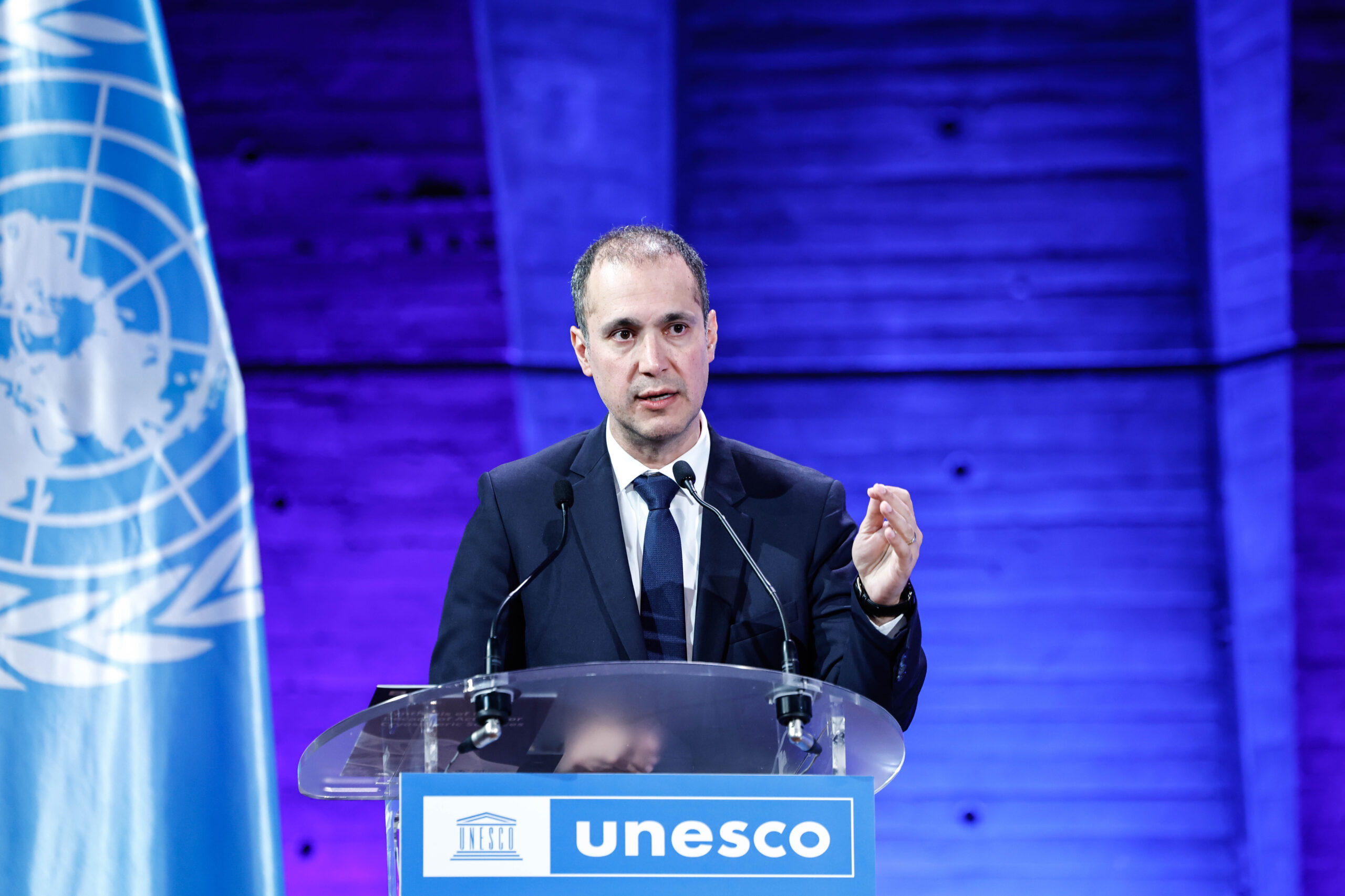
Water lies at the heart of some of the world’s most pressing challenges, affecting climate change, food security, public health, and the stability of communities and nations worldwide. For Dr. Kaveh Madani, a research professor at CCNY’s CUNY-CREST Institute and director of the United Nations University Institute for Water, Environment and Health (UNU-INWEH), addressing those challenges has defined his career, placing him among the most influential voices in the field.
Madani was recently named the 2026 recipient of the Stockholm Water Prize, widely regarded as the most prestigious global award in the field of water. The honor recognizes his work bridging science, policy and diplomacy to address water scarcity and sustainability at a global scale.
He described the recognition as both humbling and collective.
“It’s a very big honor for me to be in the same club with some of the most impactful and thoughtful leaders in the field,” Madani said, adding that he shares the achievement with “my mentors, my students, my collaborators and the people of my homeland, Iran”.
Madani’s work includes engineering, environmental economics and policy, shaped by a career that has crossed disciplines, institutions and continents. He has held academic roles in the United States and the United Kingdom, served in high-level government positions in Iran, and later returned to academia and international leadership, including roles at Yale University and the United Nations.
At 44, Madani is the youngest recipient in the award’s history, as well as the first United Nations official and former politician to receive the distinction. Madani’s selection for the Stockholm Water Prize reflects not just a single breakthrough, but a body of work that has reshaped how water challenges are understood and addressed across disciplines.
He has focused on making scientific research actionable for decision-makers while also engaging the public. Rather than pointing to a single defining contribution, Madani emphasized the range of his approach, from advancing modeling techniques to introducing new conceptual frameworks that shape global discourse.
“I think that it was the combination of different things,” Madani said. “I was always passionate about ensuring that the result of my mathematical models would be useful for policymakers and also translating them for the general public.”
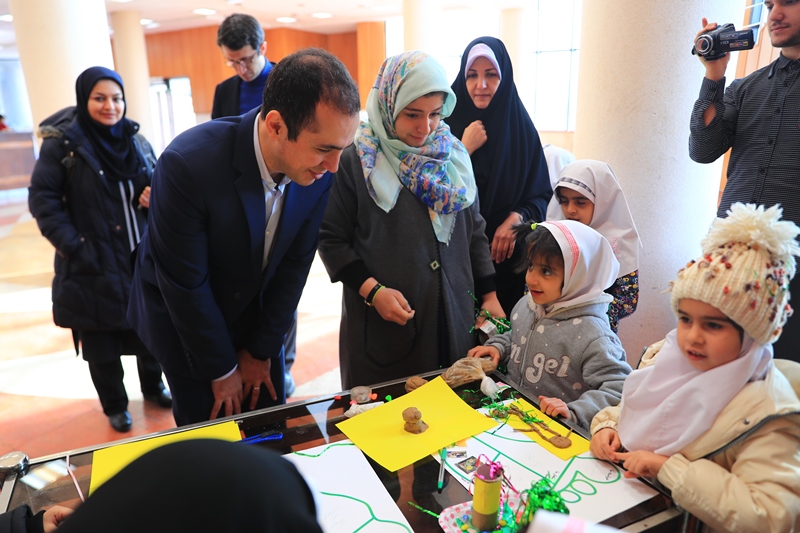
Dr. Madani during his tenure working in Iran’s Department of Environment. Photo Credit: Courtesy of Dr. Madani.
One of his most recent influential contributions is the concept of “water bankruptcy,” a framework that has gained global recognition for reframing how water scarcity is understood.
“Just like financial bankruptcy, water bankruptcy is about the mismatch between water expenditure and income,” Madani explained. “So nature gives us some income through precipitation that has now become more limited in some places because of climate change. On the other hand, our expenditure has grown because of population increase and development, so our need keeps increasing while our resources are shrinking.”
The consequences extend beyond scarcity. Overuse of surface and groundwater, he noted, has led to long-term environmental damage, with some systems losing their ability to recover.
This framework challenges the common idea of water crises as temporary disruptions. Instead, Madani argues, many regions are facing permanent structural change. Recognizing that shift, he said, is essential to preventing further damage and adapting to a more constrained future.
At CCNY, Madani’s work continues through the CUNY-CREST Institute, where he collaborates on research using geospatial and satellite data to address water and environmental challenges and improve the quality of life. He also helped establish a United Nations University Hub at CCNY, creating opportunities for students to engage directly with global sustainability issues.
“We have built a United Nations University Hub because we believe that what is produced at City College can impact the world,” he said.
According to Madani, City College’s unique role in shaping future leaders, its diversity, history, and connection to New York City as a living laboratory for urban challenges were major factors in making the campus the first United Nations University Hub in the United States.
“If we can address the digital divide, if we can turn data into knowledge, then we can be game changers,” he stated.
In his current role as director of the UNU-INWEH, Madani continues to bridge science, policy, and diplomacy on a global scale, addressing issues ranging from water access in rural communities to the sustainability of emerging technologies.
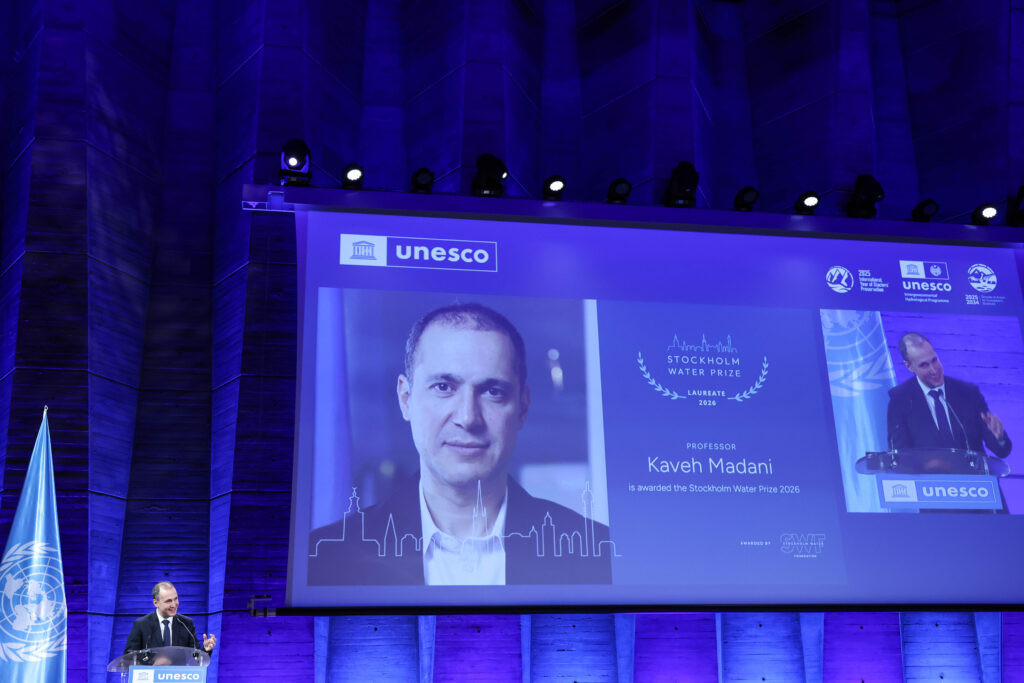
Dr. Madani speaking at an event honoring his 2026 Stockholm Water Prize. Photo Credit: Courtesy of Dr. Madani.
As he looks ahead, he sees water not only as a critical resource but as a pathway toward collective action.
“Water can be our common denominator in a divided world,” Madani said. “Let’s appreciate the value of water, and let’s understand that this is a strategic opportunity for the world, a resource that we haven’t thought enough about and invested enough in its protection and conservation.”

Sofia is a graduate student at CUNY Brooklyn College, where she’s pursuing her M.S. in Media Studies. Her work centers on cultural affairs, capturing people’s lived experiences, and producing work that is not only compelling and polished but also intentional, inclusive, and aligned with meaningful public impact. In addition to writing for The RICC, she’s a dedicated writer for the Brooklyn News Service.