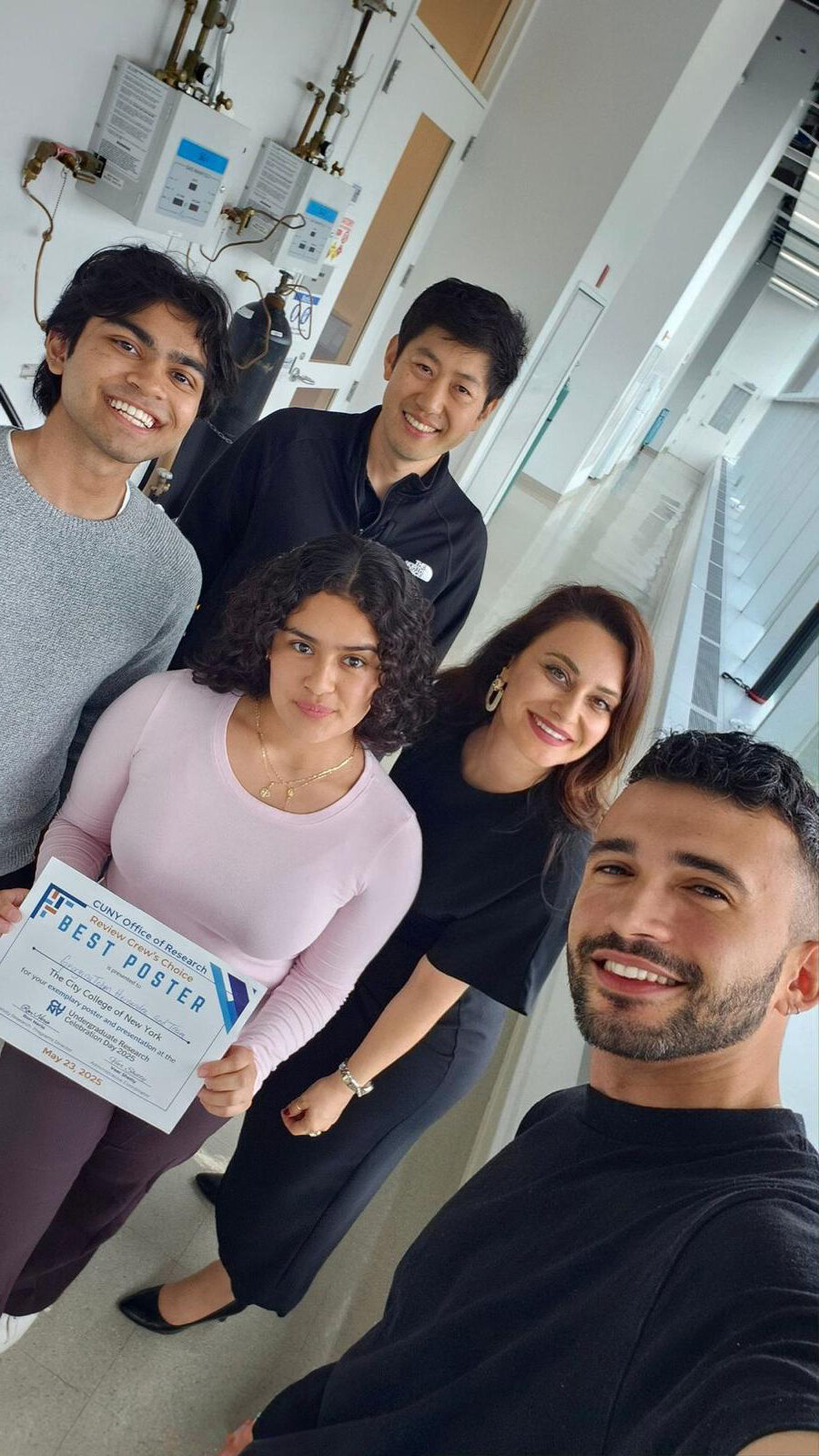
Architecture student Michael Monsalve-Ramirez and chemical engineering students Georgina Tobon-Hernandez and Sheikh Alif have teamed up to work on an evaporation-driven engine, building sustainable technologies and contributing to a more climate-conscious future.
Part of City College of New York (CCNY) Professor Xi Chen’s Nanoscience Initiative lab at the Advanced Science Research Center (ASRC), the trio is working to build an evaporation- driven engine using water responsive materials. The goal of their work is focused on using evaporation energy to power a plant based air filtration and circulation system.
“ The theme of the entire lab is that we work with water responsive materials. These are materials that change in some way based on what humidity conditions are present,” said Alif.
Chen’s lab primarily focuses on evaporation energy where researchers study how natural systems move as water changes from liquid to gas; working to create machines that mimic these movements, make energy, or support green chemistry.
In 2024, Chen was awarded a Track M: Water-responsive Materials for Evaporation Energy Harvesting grant. As one of many beneficiaries of the $650,000 award, Chen leads as the principal investigator of their project with professor of architecture Ahu Aydogan joining as one of three co-principal investigators.
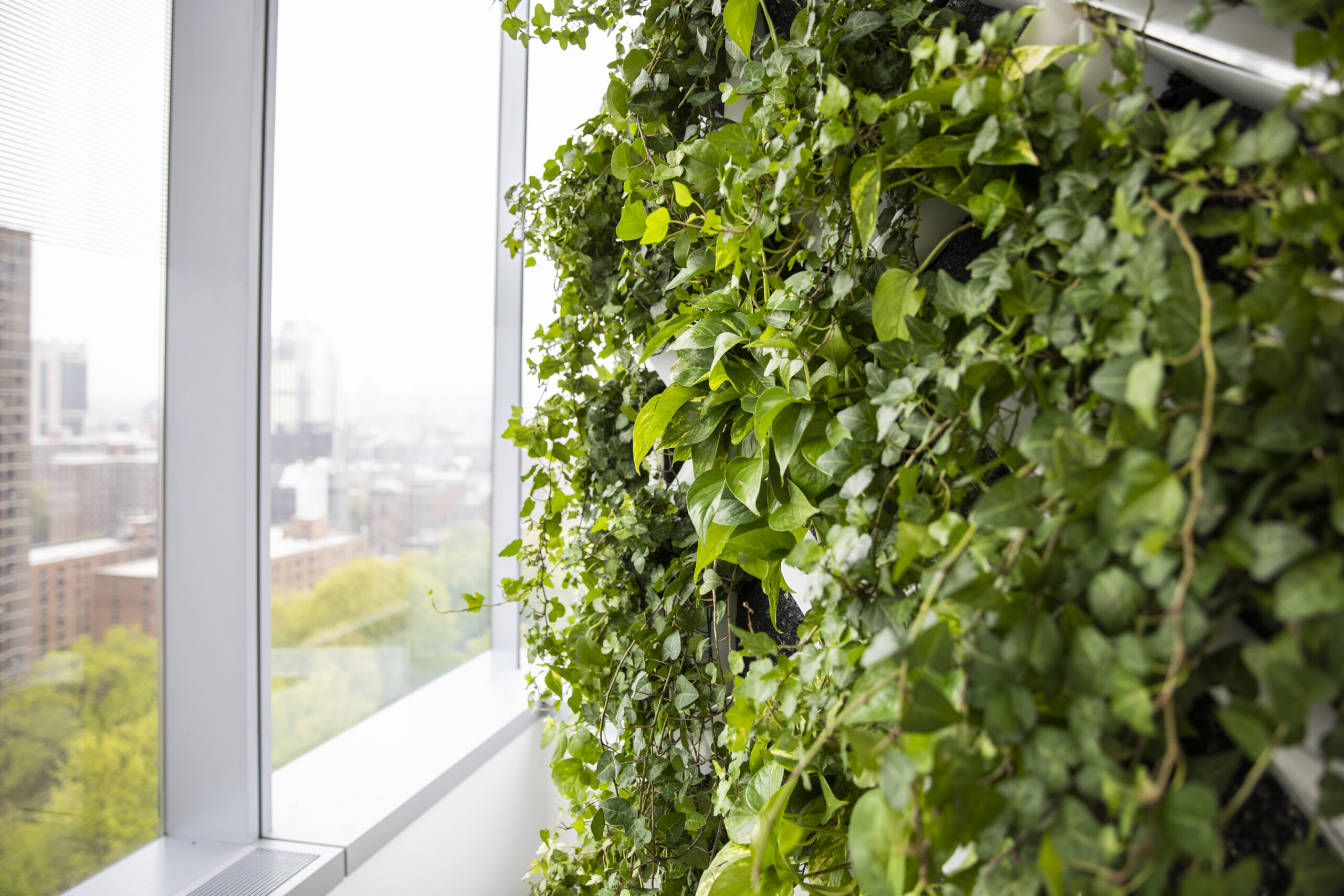
Aydogan, who’s experienced with the ASRC’s interdisciplinary structures, led the construction of “Bre△the”, a green wall air filtration system that uses living plants and engineered growing media to clean and recycle indoor air; her current collaboration with Chen links that system to the evaporation engine. By integrating the two, the team aims to eliminate the need for mechanically powered fans in the green wall by substituting with a passive air circulation and filtration system to “lower building energy consumption while enhancing occupant well-being and mental health due to the presence of botany and nature,” said Aydogan.
“ What we do deals a lot with prototyping,” said Monsalve-Ramirez. As the prototype team, the trio’s main focus is on designing engines, performing tests and collecting data from their models. “We build physical models and we’re specifically working with an evaporation engine so we have to constantly design and have them laser cut, assembled, tested,” explained Monsalve-Ramirez.
The interdisciplinary structure at the ASRC encourages cross-collaboration across the five initiatives: environmental sciences, nanoscience, neuroscience, photonics, and structural biology; a setup reflected in their own team. With backgrounds in architecture and chemical engineering, the team blends design precision with scientific analysis to bring their ideas to life.
“We’re trained to think about sustainability,” reflected Monsalve-Ramierz. Learning the ins and outs of architecture, he’s noticed a shift away from traditional construction methods to one that is more conscious of energy consumption and its effects on our climate.
Joining the team in Spring 2025, Tobon-Hernandez also participated in an REU program under NSF funding with Columbia University and the ASRC over the summer. She echoed similar statements to her colleagues. In choosing to study chemical engineering, she notes sustainability was a motivating factor for her.
“I found an interest in science and also developing sustainable ways that could possibly change the ways we perceive how we obtain energy.”
As the team has made strides towards their ideations, Alif shared that being part of the team has taught them how to manage not only breaking down tasks based on their individual skillsets, but also how to manage the administrative side to running a lab.
“It emulates a small company,” said Alif. “We worry ourselves about how much money we have left, how much time we have left, what are our deadlines, what are the milestones that we have to reach to continue making progress. It’s very similar to starting a business, which I think is a really valuable experience.”

Leandra is an early career journalist with an M.A. in Arts & Culture Reporting and Documentary Filmmaking from The Craig Newmark Graduate School of Journalism. With experience reporting for community news outlets such as The Riverdale Press and The Mott Haven Herald, Leandra currently writers for CUNY academic publications The RICC and Research in Focus.