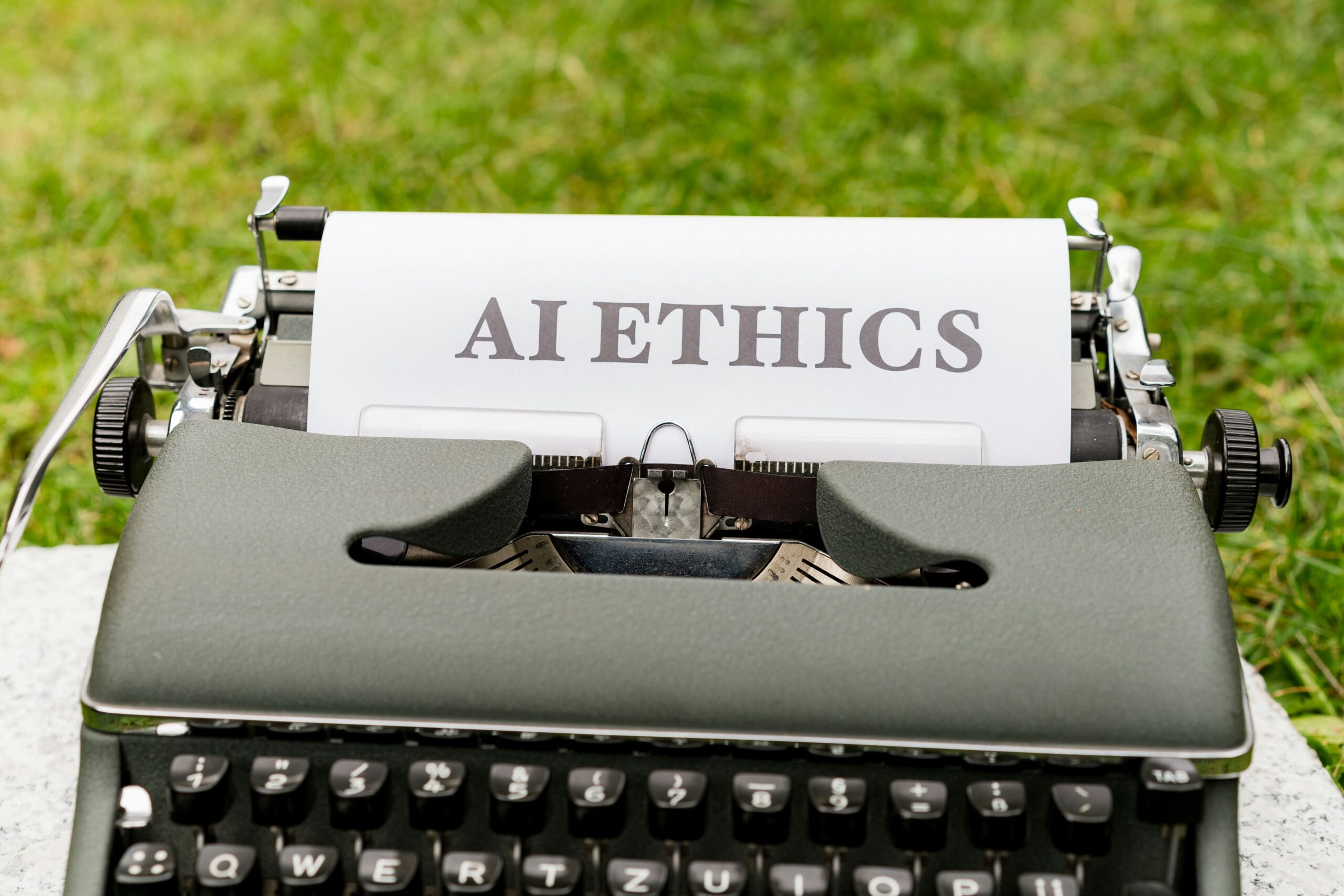
A quick grammar check turns into suggestions for restructured sentences to entire paragraphs being rewritten and soon enough an essay has transformed into an immaculate, lifeless body– “perfected” by AI. When students have this technology at their disposal, constantly offering help with such zeal, the temptation to resist often proves too difficult.
In her research project, “The Ethical Use of AI in the Creative Writing Classroom,” writer and Black Studies professor Emily Raboteau investigates this inevitable use of AI in her workshops and its effect on originality.
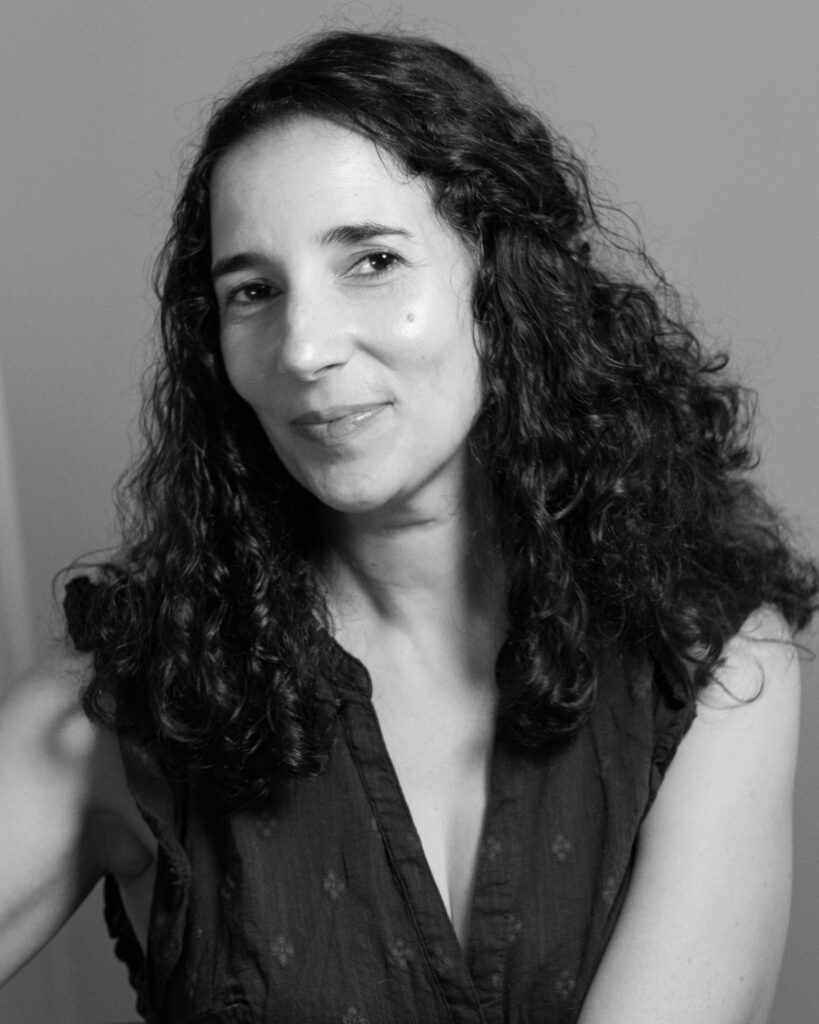
Emily Raboteau
The project, which received a $25,000 AI Innovation Award from CUNY’s Office of Academic Affairs, was designed in collaboration with creative writing professor Briallen Hopper from Queens College. Raboteau and Hopper would re-design two creative writing workshops that incorporate AI Literacy within the curriculum and also create clear policy guidelines on the ethical use of AI on their syllabi. This would involve conducting a student survey to collect data on AI use.
“We imagined that the project would allow us to jointly address the challenges of harmful AI use among college-level creative writing students and explore opportunities for its innovative potential,” Raboteau said. “I’ve since revised my thinking about that last part.”
In the months since she and Hopper began research for the project, Raboteau has reconsidered whether there should be a space for this technology in creative writing classrooms at all.
The following is an interview with Raboteau.
Has research begun already for the project? If so, what has your research uncovered so far?
Prof. Hopper and I are currently in the first stage of the project, collecting and reading articles on this topic. They are proliferating very quickly now. Honestly, the more I read, the more convinced I am that we should be encouraging our students to rebel against the automation of higher educationto preserve cognitive development, critical thinking and data privacy. The environmental and social costs are too high. I’m interested in the resistance movements afoot, such as the AI Moratorium Coalition, deliberate slowdowns to AI adoption in the classroom vis-a-vis handwritten essays, in-class writing, and the use of oral exams to circumvent AI text generation; formal anti-AI pledges and policies at the institutional level. But I also know my students are using it, and I want to better understand how and why they are using it.
What had you been seeing in your classrooms that first encouraged you to take up this project? Can you recall a specific instance where students were using AI in new and surprising ways?
Honestly? I’m seeing a doom-loop of dependence, cognitive atrophy, an outsourcing of meaningful analysis, and a depressing decline in originality. I felt really concerned when I started to clock that some of my students were using generative AI for creative writing assignments and peer critiques in writing workshops. I can tell when they’ve used it. There are structural and stylistic giveaways. The rule of three, contrasting “Not just…” formulas. It’s slop. I’m not blaming them. I want to make a space for real critique. What’s the point of sounding like everyone else? It’s a technology that promises to ruin art, wreck the environment, steal your data and make you unemployed. Like, on an existential level, as a creative writing teacher, it’s made me question what I’m even doing here. As a published writer, I’m part of the Anthropic copyright infringement lawsuit because my books were pirated without my consent. It’s dirty business.
Have you used AI in your own creative writing or teaching in any way?
I’m in favor of artisanal human generated sentences and suspicious of hallucinations, surveillance, and big tech in general. I’m fearful of deepfakes, the perpetuation of bias, job displacement, environmental degradation, cyber-attacks and autonomous weaponry. That said, I recently experimented with AI to organize my students into small groups, and then to reorganize those groups into new groupings so that none of the students met with the same students again. It failed to do what I asked.
How have your own views of artificial intelligence in the artistic spaces changed, if at all, over the past year?
I’d say they have moved from cautiously pessimistic to extremely alarmed. And recent research shows there’s growing distrust and skepticism toward AI among young people—Gen Z and teens are getting anxious and critical, even though they’re using AI out of academic necessity or because it’s being rammed down their throats. Our research questions include: How are our students currently using AI to create, support, or enhance their writing assignments? What is students’ level of awareness about the ethical, social, cultural, and environmental implications of AI, including plagiarism and copyright infringement? How might improving our own AI literacy as faculty help us to become better writing teachers? How is AI affecting our students’ career paths and plans?
“What are the costs and benefits of AI use on critical thinking, executive functioning, time-management, editing, pre-writing, research, creativity, originality, plot, structure, and voice among emerging writers?”
How are other writing faculty (at CUNY and beyond) restructuring their syllabi and rethinking their pedagogy to benefit their writing students? What policy provisions are being made vis a vis academic integrity at our university and at other universities? I’d like to listen to my students’ healthy fear of AI and learn better how to rechannel that energy toward human connection.
What do you hope to accomplish with this award and your research?
I hope to engage critically with my students about AI, so they have a deep understanding of its social and environmental harms so that at least they are making informed decisions. Beyond the timeline of the award, Prof. Hopper and I may share our findings and guidelines in a co-written essay for a magazine with wide reach, such as The Chronicle of Higher Education or The Writers Chronicle.
Do you think implementing ethical guidelines and teaching AI literacy will be enough to offset the threat of this technology in creative spaces in terms of originality? Why or why not?
In the creative space of my own classroom? Yes. In the brains of my students? Yes. They can recognize the enemy.
“I believe that my students and I can think through this together and arrive at a workable approach that lets them create while resisting the hivemind.”
My instinct is that we do this by celebrating their unique voices and lifting up their stories
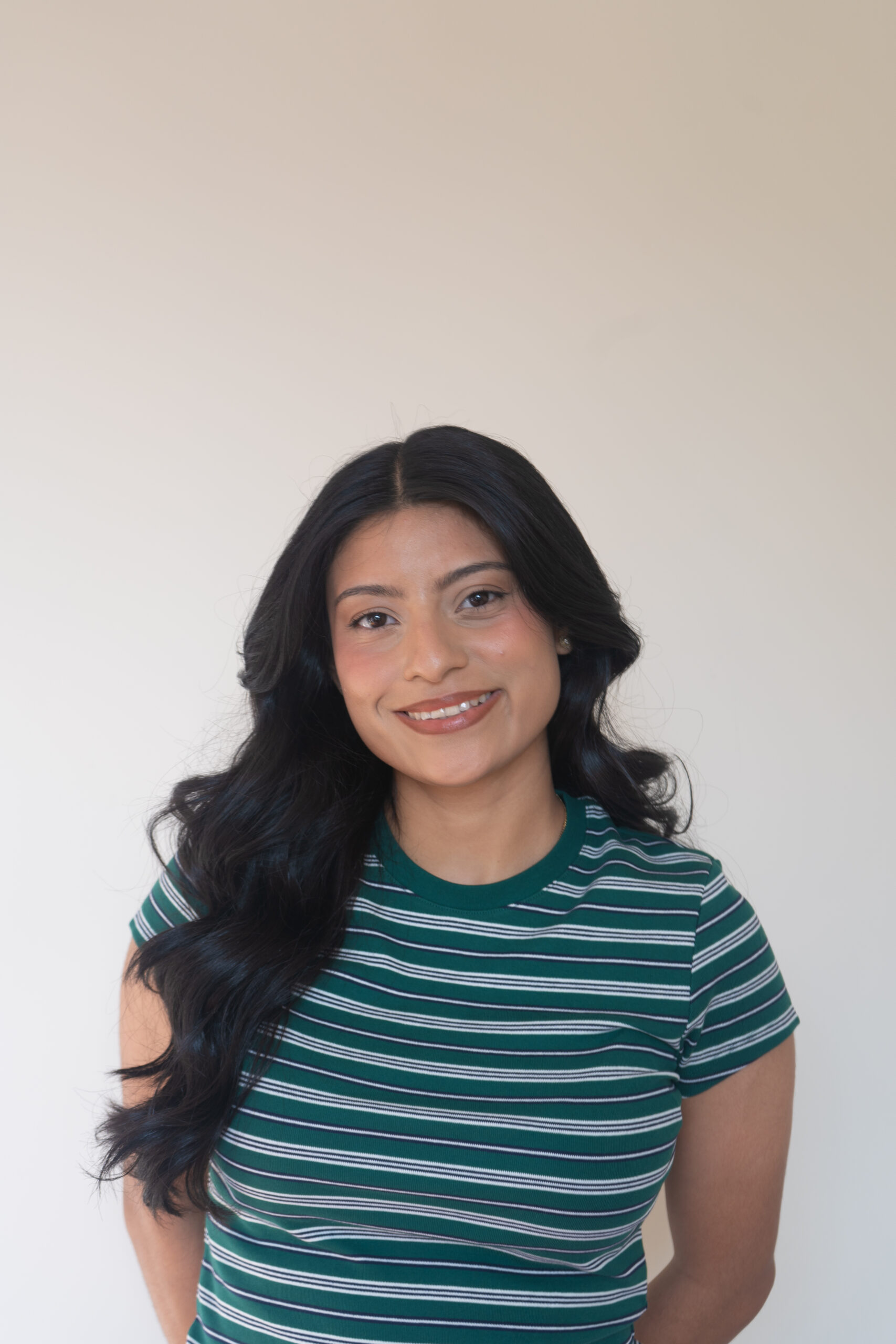
Yadira Gonzalez is a graduate of Baruch College where she studied journalism and minored in film. She was an editor-in-chief of Baruch’s award-winning magazine Dollars and Sense. Her writing has also been published in Documented, The New York Review of Books and AdAge.