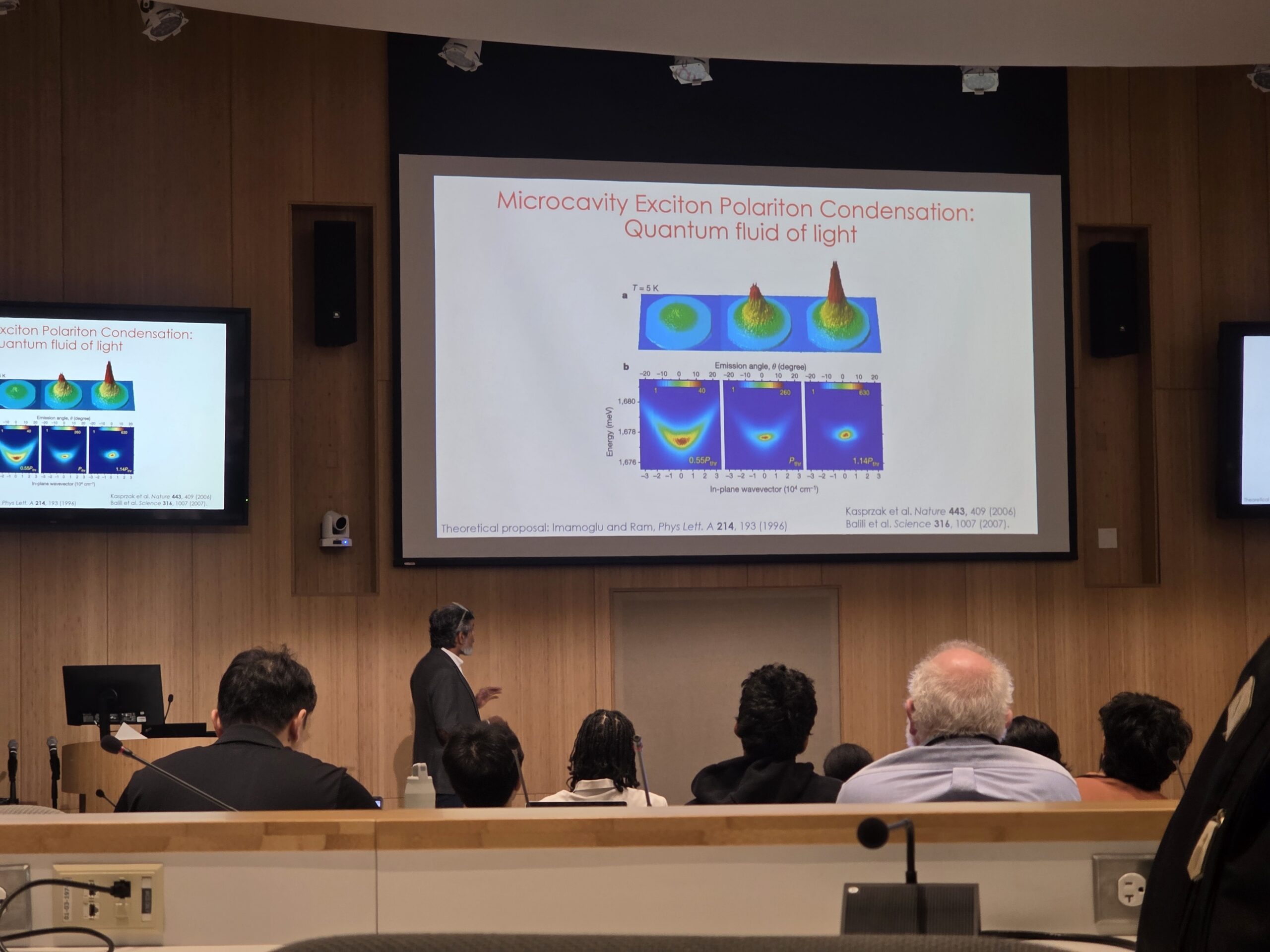
The New York AI Agents Summit welcomed over 150 faculty, students, and representatives from industry and government organizations for a two-day event focused on the development and deployment of real-world AI agents.
 The two-day event aimed to utilize AI as the ‘great equalizer’, according to the Summit’s website. By bringing together researchers and industry leaders, the AI Summit discussed topics to bridge the gap between academia, industry, and government. The first-of-a-kind event was organized by Assistant Professor Dr. Saptarashmi Bandyopadhyay of computer science, who conducts research on artificial intelligence agents and autonomous decision-making.
“This gathering of people united by their desire to leverage AI Agents in solving important real-world problems demonstrates the unique opportunity AI Agents give to create collaborations from ordinarily separate disciplines,“ said Bandyopadhyay.
Day one of the event was hosted by City College at the CUNY Advanced Science Research Center.
The conference included speakers from CCNY and beyond, looking at the application of AI across different fields.
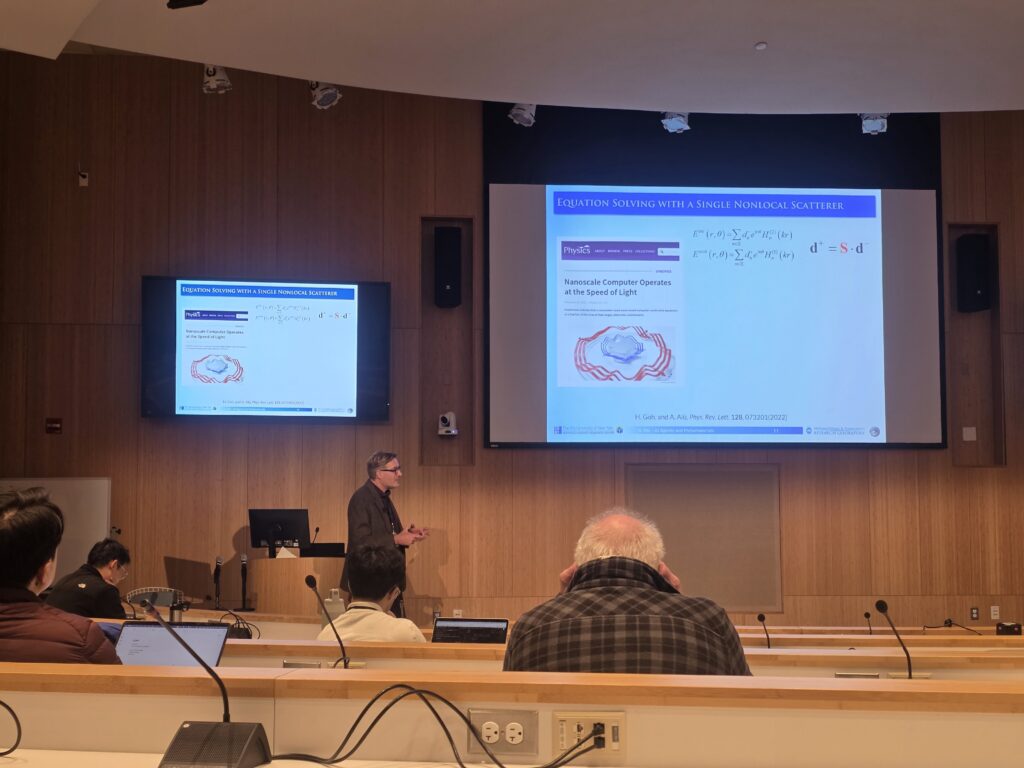 The first session on AI Agents for Quantum, Phonetics, and Material Discovery. Speakers included CCNY Physics Professor, Dr. Vinod Menon, and Pennsylvania State University Professor of Chemistry, Dr. Edward O’ Brien. O’Brien’s research focused on the lack of metadata and how AI agents can be used to reuse data.
Seminars by Thomas Yeh, from NYSERDA, and Alexander Tzanov, director of CUNY HPCC, focused on AI Agents for interdisciplinary applications.
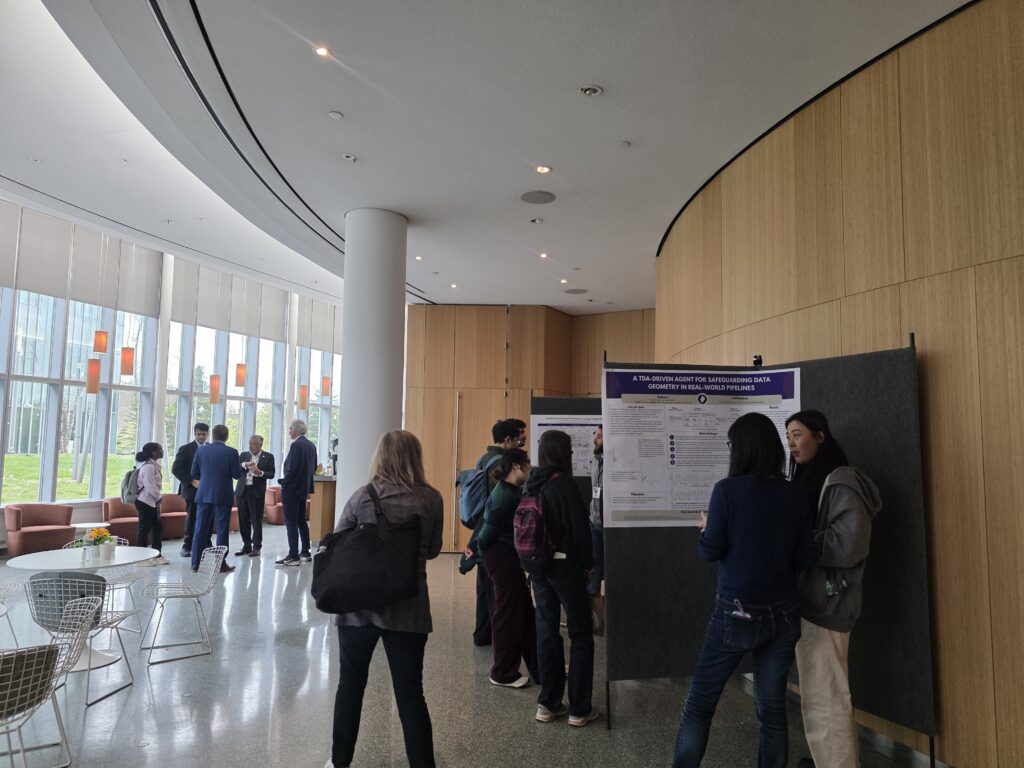
Student researchers from CUNY and the NYC area participated in a poster session, presenting their AI-related research from data security to location-based VR.
Afternoon sessions on AI Agents for Energy Orchestration by Sanjoy Banerjee (CUNY Energy Institute)pointed to AI applications for modernizing the electrical grid.
CUNY’s ASRC Director of Structural Biology Kevin Gardner wrapped up the day by presenting “Controlling Biology with Chemistry: Perspectives for AI-enabled discovery.”
“I hope that attendees take away that AI Agents are not merely a tool but a new paradigm of Computer Science to think about decision-making in interdisciplinary real-world applications,” said Bandyopadhyay. “Their fullest potential isn’t through automating humans but to support humans as they accomplish great and important feats of engineering and research such as discovering new treatments for disease, building housing infrastructure, creating NextGen Internet, having safe autonomous vehicles, enhancing the supply-chain environment and managing critical energy infrastructure.”
Malina Seenarine is a recent graduate of Baruch College, where she studied journalism and minored in theater. In addition to writing for The RICC, she has contributed to Baruch’s award-winning Dollars & Sense Magazine and has written for the arts and news section of Baruch’s student-run newspaper, The Ticker. She’s also written for FSR magazine.