A new initiative at The City University of New York and The City College of New York aims to shorten the process of developing new material with help from artificial intelligence and robotics.
Supported by an $18.1 million National Science Foundation award, the AI-Enabled Bio-Inspired Materials Ecosystem, or AI-BIOME, will connect automated laboratories that researchers nationwide can access remotely. The goal is to accelerate the development of materials inspired by nature, with potential applications ranging from sustainable plastics to drug delivery.
For Rein Ulijn, director of the CUNY Advanced Science Research Center’s Nanoscience Initiative and a co-principal investigator on the project, the effort represents an opportunity to rethink how scientists discover materials, and who has access to the tools needed to create them.
Long before Ulijn began studying how molecules assemble into materials, he was fascinated by how people-built things. Growing up in a small village in the Netherlands, he enjoyed adventures with friends and trips with his parents to London, Paris and New York, where the architecture captured his imagination.
In eighth grade, a lesson on genetics gave that curiosity a scientific direction. Biology suddenly seemed governed by rules that could explain what he observed.
Biotechnology was the beginning of his path to chemistry. The possibility of reprogramming biology to address challenges in medicine and sustainability appealed to him, but it also raised deeper questions. To understand how biological systems could be adapted for new purposes, he needed to understand their molecules.
That interest led him to pursue a doctorate in chemistry at the University of Strathclyde in Scotland. His adviser, Peter Halling, helped shape his approach by demonstrating how physical principles could explain biological systems, including how they might behave in unfamiliar environments. Ulijn’s own research has since moved across biotechnology, physical chemistry and materials science, retaining that connection between disciplines.
“The important idea is that composition dictates function,” he explained. “If we can understand that relationship, we can begin to design materials almost like developing a recipe for a particular property.”
Finding those recipes often involves unexpected results.
“Experiments not going as planned are about 95% of what we do, and the key is to pay attention to these apparent failures and learn from them,” Ulijn said.
One recent example involved peptide materials that changed dramatically depending on the amount of water present. In humid conditions, they could liquefy; as they dried, they became strong adhesives.
“You can stick two things together with this liquid peptide material, and release them again simply by breathing them,” he explained. His team is now studying how to control that behavior.
AI-BIOME aims to create more opportunities for discoveries like these. Automated equipment will allow researchers to explore more combinations of ingredients and experimental conditions, while artificial intelligence will help identify patterns across successful and unsuccessful results.
Ulijn co-directs the initiative with CCNY physics professor Ronald Koder and oversees its activities. The AI-BIOME leadership team includes co-principal investigators Saptarashmi Bandyopadhyay (Computer Science, CCNY), Raymond Tu (Chemical Engineering, CCNY), and Xi Chen (Nanoscience CUNY ASRC/Chemical Engineering, CCNY), Each bring their expertise in multi-agent AI, peptide materials, and automated characterization. The partnership connects CCNY’s capacity to make and test many materials with the ASRC’s facilities for examining their properties in detail. Those findings will then inform further experiments.
“This creates a continuous loop of testing, changing and improving, much like biology uses evolution to produce better solutions for a specific task,” Ulijn said.
The greatest promise lies in changing the discovery process itself. Scientists face enormous numbers of possible molecular combinations, yet conventional experiments examine only a small fraction. A more systematic search could help researchers identify useful materials that would otherwise remain unexplored.
Turning those discoveries into products will require additional work. Researchers must establish that a material can be manufactured reliably, performs at scale, is safe and makes economic sense. Shortening the distance between an intriguing laboratory result and a practical application is one of the project’s goals.
Through the planned cloud laboratory, students, small research groups and startups could design experiments remotely and use equipment they could not afford to maintain themselves.
“A small company may have a great idea but cannot invest millions of dollars in robotics, characterization and AI infrastructure,” Ulijn said. “Shared cloud laboratories can give them access to capabilities that previously were available mainly to very large organizations.”
A recent summit in Washington, D.C., reinforced his view that AI-BIOME should be built as part of a connected national research system. Its potential extends beyond the facilities in New York to collaborations that allow experiments, data, and expertise to move across institutions.
For Ulijn, the project’s success will depend on both the pace of discovery and the opportunities it creates: “whether students, researchers and companies can use this infrastructure to do things they could not do before.”
The project’s lasting impact may be measured not only by the materials it produces, but also by the discoveries it makes possible for researchers who previously lacked the resources to pursue them.
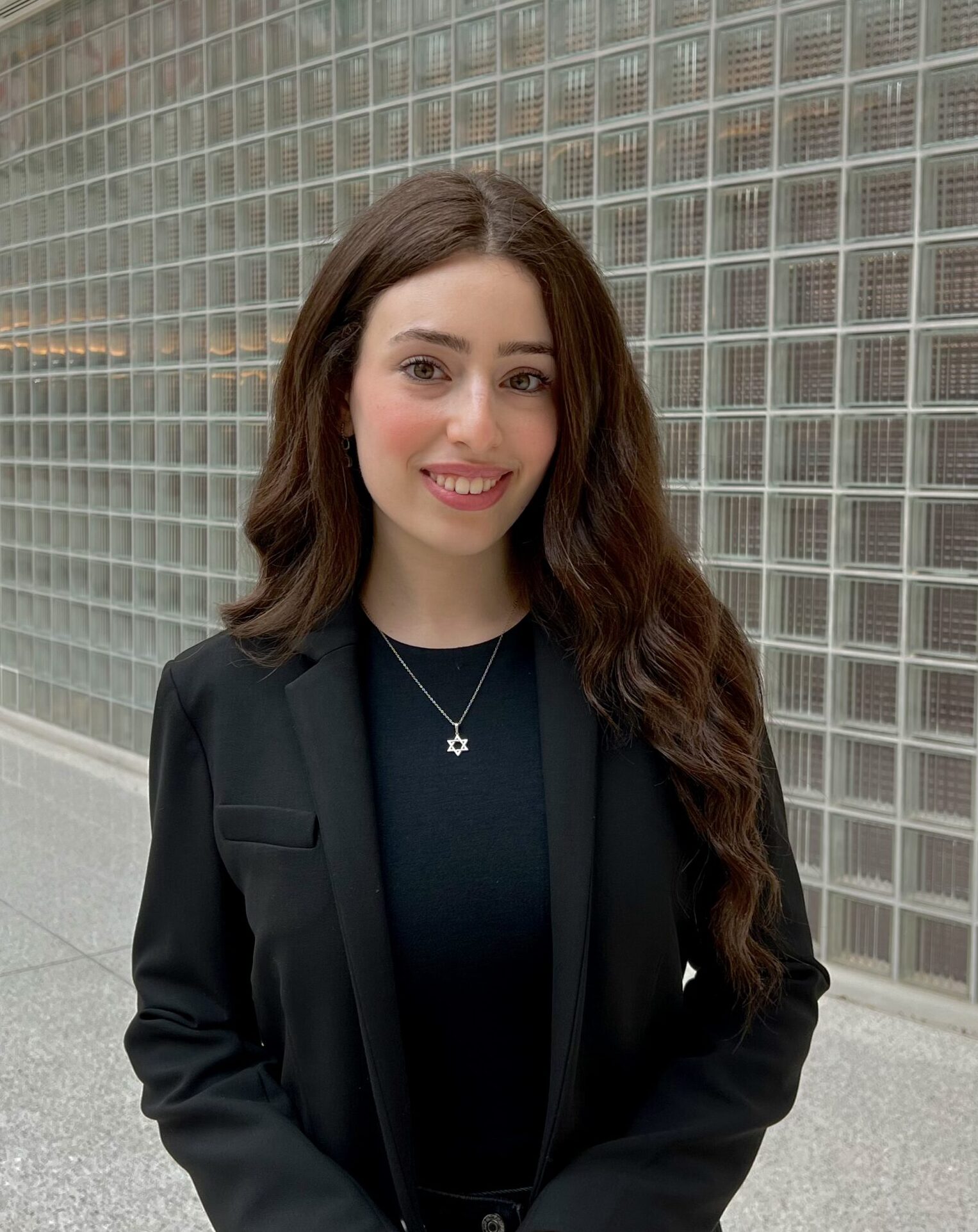
Daniella is a writer and journalism student whose work explores the intersection of research, culture, and communication. She is currently a Writing Assistant at the Research and Innovation Center at City College of New York.